
Senate Approves Electronic and Manual Transmission Of Election Results Ahead Of 2027 Elections
✍️ By Teju/ January 10, 2026/ 4:00pm
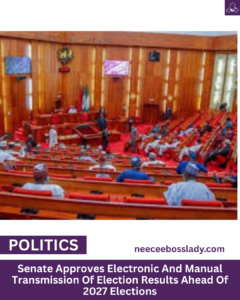
Nigeria’s Senate has reaffirmed its support for the electronic transmission of election results while also maintaining manual documentation as a backup in cases of technical failure, in a major development for the ongoing amendments to the Electoral Act.
In an emergency plenary session on Tuesday, lawmakers clarified Section 60(3) of the Electoral Act (Amendment) Bill to officially keep electronic transmission of polling unit results part of the legal framework. However, the Senate also introduced safeguards specifying that where electronic systems fail due to communication or technical issues, the physical results recorded on Form EC8, signed and counter-signed at polling units, will serve as the authoritative backup for collation.
The decision follows earlier confusion and public debate when the Senate initially rejected a proposal to make real-time, mandatory electronic transmission part of the law. Critics, including civil society organisations, journalists, labour groups, and legal advocates, warned that weakening the transmission clause could undermine transparency and public confidence in the integrity of future elections.
Supporters of stronger electronic reforms argue that compulsory and immediate transmission from polling units to the Independent National Electoral Commission’s (INEC) Result Viewing Portal (IReV) would reduce manipulation, speed up collation, and enhance credibility. Groups such as the Nigerian Guild of Editors and other civic bodies have publicly urged lawmakers to enshrine mandatory real-time transmission in the law.
Senate leaders have maintained that the amendments do not remove electronic transmission altogether but rather retain flexibility for both digital and manual methods. Their approach is framed as a practical compromise to address infrastructure challenges in some parts of the country while keeping technology-based results reporting available.
The Electoral Act Amendment Bill will now move to harmonisation with the House of Representatives’ version before it can be sent to the President for assent. With the 2027 general elections approaching, debates over result transmission remain central to discussions about electoral transparency, accountability, and public trust in Nigeria’s democratic process.


