TELCOS TO DEDUCT USSD CHARGES DIRECTLY AS NCC, CBN APPROVE NEW BILLING FRAMEWORK

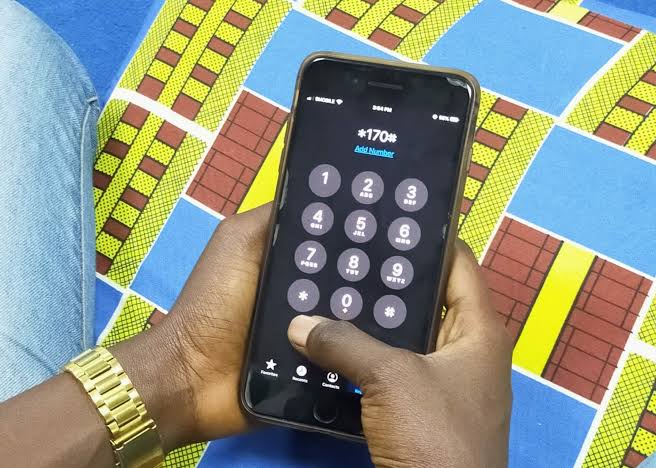
Telecommunications operators in Nigeria will now collect Unstructured Supplementary Service Data (USSD) charges directly from subscribers’ airtime balances, following a landmark policy shift jointly approved by the Nigerian Communications Commission (NCC) and the Central Bank of Nigeria (CBN).
The new billing system, known as the End-User Billing (EUB) framework, officially empowers telcos—including MTN, Airtel, Glo, and 9mobile—to bypass banks in the collection of USSD fees, a move industry players say will foster transparency and accountability.
The revised model mandates that subscribers be charged ₦6.98 per session (up to 120 seconds), only after receiving a prompt to consent to the deduction.
For years, telecom operators had raised concerns over banks allegedly withholding payments for services rendered. By the end of 2024, banks reportedly owed telcos over ₦200 billion in unpaid USSD transaction fees.
“Before now, banks would deduct the money from our accounts and fail to remit it to the telcos. It was always a problem,” said Adeolu Ogunbanjo, President of the National Association of Telecoms Subscribers (NATCOMS). He hailed the new model as “long overdue,” adding that it will compel service providers to raise the standard of delivery across the telecom sector.
The Association of Licensed Telecom Operators of Nigeria (ALTON) confirmed the rollout of the new regime this week, with some commercial banks—such as GTBank, UBA, and FCMB—notifying customers of the shift in billing.
ALTON Chairman Gbenga Adebayo described the reform as “a significant milestone in the evolution of Nigeria’s digital financial ecosystem,” saying it promotes a transparent and customer-focused approach to USSD service delivery. He also assured subscribers there would be no disruption to services, and that commonly used USSD codes—for balance enquiries, fund transfers, and bill payments—would remain active.
A Long-Running Dispute Resolved
The USSD billing dispute dates back to 2019, when telcos first accused banks of defaulting on agreed remittances. In 2021, the NCC and CBN intervened with a temporary solution, introducing a flat-rate fee of ₦6.98 per session, to be collected by banks on behalf of telcos. However, enforcement remained inconsistent, leading to repeated threats of service disconnection.
Adebayo disclosed that while the telecom industry was technically prepared for the transition, many banks failed to meet key regulatory and operational requirements, including settling legacy debts and implementing systems for error reporting and customer compensation.
To facilitate the transition, the CBN and NCC issued a joint circular on December 20, 2024, outlining a phased repayment plan for banks still owing telcos:
- 60% of historical debts to be paid by January 2, 2025
- 100% settlement of pre-existing debts by July 2, 2025
- 85% of new bills to be cleared by December 31, 2025
Driving Financial Inclusion
The adoption of end-user billing is expected to bolster digital financial inclusion, especially for millions of Nigerians in rural and underserved communities who rely on USSD for banking services due to limited access to smartphones or internet connectivity.
With subscribers now in direct control of payments, stakeholders say the system is better aligned with consumer rights, trust, and operational efficiency—paving the way for a more resilient digital finance ecosystem in Nigeria.